

If you live in Adelaide, you already know our tap water has a bit of a reputation. Being right at the end of the Murray-Darling Basin means by the time the water gets to our taps, it’s travelled a long way and picked up a heavy mineral load. For years, the main complaints we hear from clients are about the hard water scale killing their kettles or that distinct “swimming pool” chlorine smell.
But things changed a bit in early 2026. A landmark study by the University of Adelaide found trace levels of per- and polyfluoroalkyl substances (PFAS), often called “forever chemicals”, in local tap water samples. While it’s not a reason to panic, it has shifted the conversation. For many Adelaide families, filtering water isn’t just about making your morning coffee taste better anymore; it’s about safety and peace of mind.
If you’re looking to move past basic filter jugs and get a proper system installed under the sink, you’re usually looking at two choices: Carbon Filtration or Reverse Osmosis (RO).
There’s no single “best” option here. The right system just depends on what you actually want to get out of your water. Let’s look at how they compare.
What is Carbon Filtration? (The Taste Specialist)
Think of a carbon filter as a chemical magnet. It uses a process called “adsorption” to trap impurities as water passes through the block.
The Good Stuff:
Great for taste and smell:
It is highly effective at removing chlorine, chloramines, and pesticides. If you hate the smell of your tap water, this fixes it instantly.
Keeps the good minerals:
It leaves things like calcium and magnesium alone, so your water stays naturally alkaline.
Budget-friendly:
The systems are highly affordable upfront, and the replacement filters won’t break the bank.
Zero wasted water:
Every drop that goes in comes out of your tap.
The Downside:
Great for taste and smell:
It is highly effective at removing chlorine, chloramines, and pesticides. If you hate the smell of your tap water, this fixes it instantly.
Doesn’t touch hard water:
Carbon filters don’t remove dissolved solids. If you have white crusty buildup on your tapware, a carbon filter won’t stop it.
Misses certain contaminants:
It won’t remove fluoride, nitrates, or heavy metals like lead.
Limited PFAS protection:
Peer-reviewed filter studies show that while carbon handles basic chemicals well, standard activated carbon is highly variable and less effective against the full spectrum of modern, short-chain PFAS variations.
If you generally trust the water but just hate the chemical taste and want crisp, clean-tasting drinking water without spending a fortune, carbon is the way to go.
What is Reverse Osmosis? (The Total Purifier)
Reverse Osmosis (RO) doesn’t just trap chemicals; it completely purifies the water. It works by forcing water under pressure through a microscopic, semipermeable membrane. The pores are so tiny (about 0.0001 microns) that virtually nothing but pure water molecules can get through.
The Good Stuff:
The ultimate barrier:
Independent laboratory data and data from institutions like Duke University confirm that a high-quality RO membrane blocks contaminants through physical size exclusion, removing up to 99% of all PFAS compounds (including both long-chain and tough short-chain variants). It is the absolute gold standard for PFAS water filters in Adelaide. It also strips out heavy metals, fluoride, and nitrates.
No more limescale:
It removes the heavy dissolved minerals that cause hard water. Your kettle will stay spotless.
Consistent purity:
It’s a physical barrier, so it doesn’t lose effectiveness over time the way a carbon filter can when it gets full.
Pure water that still tastes great:
While standard RO water can taste flat, the systems we install include a final stage that puts the essential minerals right back in for a crisp, natural taste.
The Downside:
It wastes some water:
To flush the contaminants away and keep the membrane clean, RO systems have to send a small amount of wastewater down the drain.
Strips the “good” stuff too:
Because the membrane pores are so microscopically small, they strip out beneficial minerals along with the bad contaminants. If left unchanged, the water becomes slightly acidic.
Note: We completely solve this by installing a remineralisation cartridge that automatically adds healthy minerals back in before the water hits your glass (more on how that works below).
Higher investment:
The systems are more complex, meaning higher upfront costs and a bit more involved maintenance.
If you want total peace of mind regarding the 2026 PFAS data, or you’re sick of hard water ruining your appliances, RO is the clear winner.
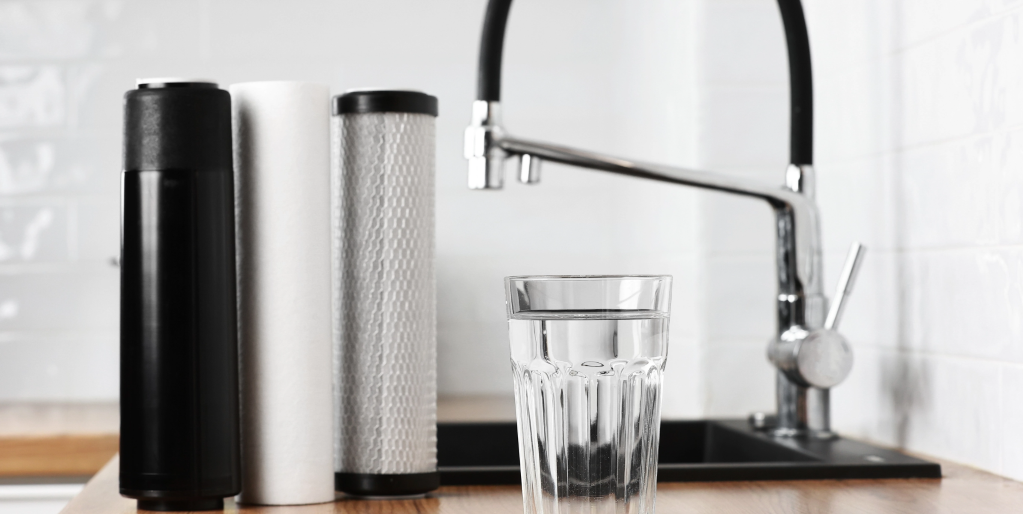
The Adelaide Comparison Table
Here is a quick look at how they stack up side-by-side:
Fixes Chlorine & Taste
Removes PFAS / Forever Chemicals
Stops Limescale/Hard Water
Removes Fluoride & Heavy Metals
Water Waste
Cost (Upfront & Filters)
What’s the Best Bet for the Northern Suburbs?
If you live out in the Northern Suburbs, around Salisbury and Elizabeth, or further up into Greenwith, or Gawler, your water quality is usually quite different from that in coastal areas. The mineral content up north is notoriously high.
Out here, hard water isn’t just a minor annoyance; it actively shortens the lifespan of your hot water systems, tap valves, and kettles.
Go with Reverse Osmosis if: Limescale is destroying your appliances, or if you want absolute certainty that your family is drinking pure water free from heavy metals and PFAS.
Go with Carbon if: You don’t have a major limescale problem, your main complaint is just that strong chemical taste, and you want a simple, budget-friendly setup.
Our Technical Tip: How We Put the “Good Stuff” Back Into RO Water
Because RO membranes strip out everything, pure RO water naturally drops to an acidic pH of around 5.5 to 6.0. To fix this, the RO systems we install at All Elements include a final remineralisation stage.
After the water is purified by the membrane, it passes through an inline cartridge packed with food-grade natural mineral stones (calcium, magnesium, and potassium). As the water flows over these stones, it naturally dissolves trace amounts of these essential minerals back into the stream, just like a natural mountain creek picking up minerals from rocks. This balances the pH back to a healthy, slightly alkaline 7.2 to 7.5, giving you the safety of pure water without that flat, metallic taste.
Let’s Figure Out What Works Best For Your House
At All Elements, we aren’t here to push one specific brand or sell you a system you don’t actually need. We live and work in Adelaide, and we know our local water inside out.
If you want an honest chat about what’s actually in your water and which system fits your household budget and needs, we’re here to help. We’ll test your water, give you the facts, and handle your water filtration installation in Adelaide properly so it lasts for years.
Ready to upgrade your home’s water quality?

